
Top 5 Ren Fest Bangers
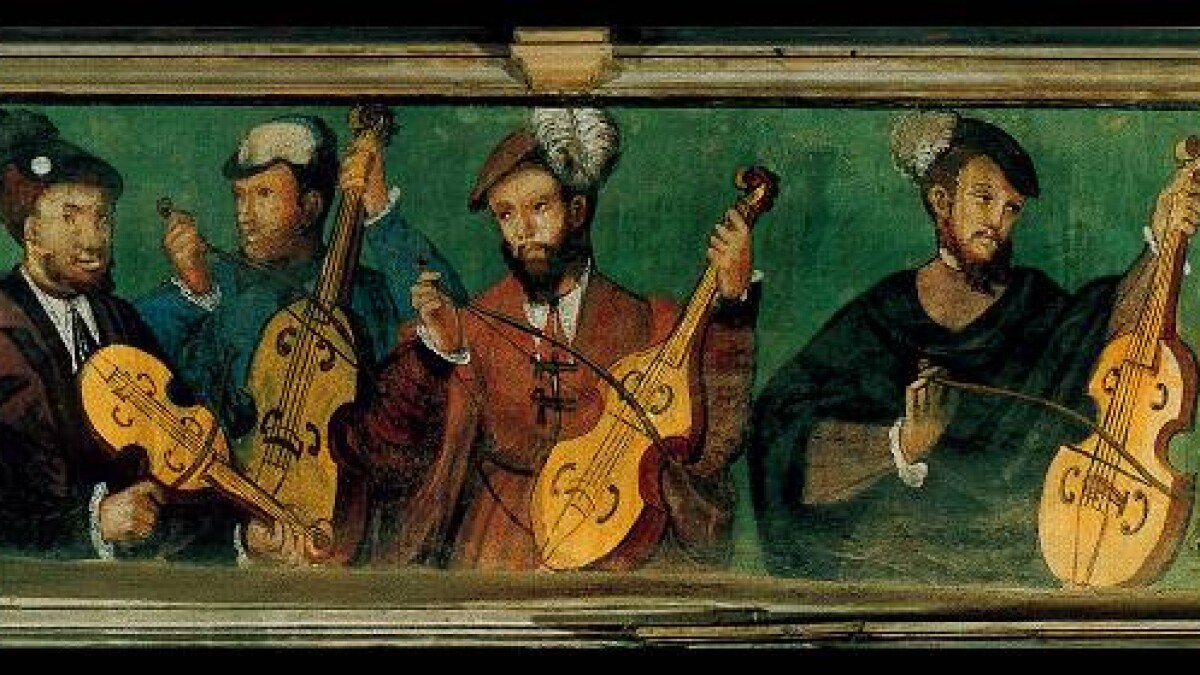
When it comes to music, nobody does it quite like Ren Faire. There are no speakers blaring out the same 20 or so songs ad nauseam. There’s no annoying advertisements popping up in between and ruining your vibe. You enter the gate and music flows into your consciousness, inviting you to revel in each and every note! Pluck and drum and blue and strum and sing, sing, O’ bards of the lanes.
We each have our favorites, the ones we sing to ourselves when we think no one is listening. But here are some of the Top Ren Fest Bangers from the Ohio Renaissance Festival!
Johnny Jump Up
Oh never, Oh never, Oh never again
If I live to be a hundred or a hundred and ten
I fell to the ground and I couldn’t get up
After drinking a quart of the Johnny Jump Up
Written by Tadhg Jordan from County Cork, Ireland, and as such includes multiple references to what Cork was like at the time.
I went up the lee road, a friend for to see
They call it the madhouse in Cork by the Sea.
There was, in fact, a psychiatric hospital up Lee Road, most likely Our Lady’s Hospital, which was built in 1791, deinstitutionalized in the 1980’s, and closed in 92′.
Well, a man died in the mines by the name of McNabb
They washed him and laid him outside on the slab
Mining in Ireland has long been a source of musical inspiration, especially to those working the copper mines that were operational at the time. Death wasn’t exactly a long-distance acquaintance, with the rugged seaside terrain and terrible working conditions.
Like most Irish drinking songs, Johnny Jump Up both lauds and warns about alcohol’s misadventures. However, it does lead one to wonder if Brody, the big civic guard, ever caught up with the man who slugged him one. You can almost see the fellow singing this to the judge as he tries to explain what went down after a quart at the pub.
New York Girls (Can’t You Dance the Polka?)
And away, you Santee
My dear Annie
Oh, you New York girls
Can’t you dance the polka?
A traditional shanty, recounting how port girls, in this case Yankee women specifically, will take all your pay if you’re not careful. Featured in Gangs of New York (2002, Touchstone/Miramax) among the slums of the Five Points, this song was collected by W.B. Wall and added to “Ships, Sea Songs and Shanties” in 1910.
The song is riddled with slang terms that would have been well known to sailors familiar with the port and to those who called the Bowery home. For instance, ‘dance the polka’ well…that’s just sex.
Sez she, “you limejuice sailor,
Now see me home you may
Limejuice sailor — Limey — British sailor
My flash man he’s a Yankee,
Wid his hair cut short behind
Flash man — a fancy man or potentially a pimp
An’ fare-ye-well, me Bowery gal,
I know yer little game
The Bowery was a notorious area of Lower Manhattan filled with people who did what they felt they had to do to survive in a world that did not often show a kind smile to them. Names like Bill the Butcher may sound familiar, Hell-Cat Maggie, Gallus Mag, and Sadie the Goat would be well placed among his contemporaries. And anyone who knew the area knew to be cautious around anyone with skirts and a smile.
The Old Dun Cow
“MACINTYRE!”
The quintessential pub song, The Old Dun Cow, was written by Henry Wincott in 1893. It follows a group of friends as they hear of a local pub on fire and decide, rather than being civic, to go down into the cellar and raid the alcohol supplies. Quickly and through pished, their exploits take a turn for the chaotic as they soak up wine with their clothing and attempt to keep the roof up until they finish their spree.
Now, you may be wondering…why MacIntyre? Why such a random name thrust into a song about getting drunk during a fire?
Well, for one thing, the original song included the following lines naming one of the gang of drunkards as such:
‘Don’t let ’em in till it’s all mopped up’
Someone said to MacIntyre
So we all got blue blind, paralytic drunk
When the old Dun Cow caught fire.
For another, shouting “Fire!” in a crowded pub doesn’t sound like a great idea in any era. The “MacIntyre!” call-and-response came later as an incentive to patrons to participate in the fun without causing panic to those who might be hearing the song for the first time.
The Scotsman
Ring-di-diddle-i-didi-o
Ring-di-diddle-i-o
I wonder if it’s true what they don’t wear beneath the kilt.
A favorite among the bawdy pub patrons, The Scotsman tells a playful tale of a Scot who’s gone and had too much to drink and has to sleep it off next to the road. Two women come along and decide to sate their curiosity in regards to ah…regimental kilt wearing. Once they get a peek, the ladies decide to leave a little gift for the man by tying a ribbon on his endowments.
They can’t have been too disappointed with their findings, as the final line of the song insists:
In a startled voice he says to what’s before his eyes
Och, lad I dont know where you’ve been but I see you’ve won first prize!
Written in 1979 by Mike Cross of Tennessee, this song has fast become a staple of Renaissance Festivals across the country. Now, of course, these days we strongly discourage anyone from checking under another’s kilt without direct consent, and we especially don’t want that happening at faires. But the song remains a delightfully tongue-in-cheek tune about a drunken happenstance that gives even the soberest of pub goers a chuckle.
Finnegan’s Wake
Whack fol the dah now dance to yer partner
round the flure yer trotters shake
Bend an ear to the truth they tell ye,
we had lots of fun at Finnegan’s Wake
This song requires a bit of tongue-twisting as you play with the Hiberno-English phrases of each verse and chorus. In this ballad, the central figure Tim Finnegan is a hod-carrier, which means that he is a brick carrier, the hod being a tool used for that purpose. He’s a drinker, and one day he falls from the ladder and cracks his skull, causing everyone to think Tim Finnegan has died. The song then follows the chaos that occurs as people show up for the wake and
Shillelagh law was all the rage
and a row and a ruction soon began
First publicized in 1864 in New York, there have been several bids claiming ownership of the song, but thus far, there is no official writer. There was, however, a song with a similar ending written by John Brougham, which was published in 1845, that did not prove to be an ear-worm to the degree of Finnegan’s un-demise.
Music is so much a part of the Renaissance Faire that it’s both a feature and a background noise. ORF can proudly boast almost thirty performers on grounds, each one offering an array of music from authentic Renaissance-era madrigals to crowd-pleasing Irish sea shanties and hauntingly beautiful choral arrangements.
Want to know more about our musical guests? Check out https://renfestival.com/the-event/entertainment/