
Cults in the Renaissance
Cults are an ongoing subject of considerable fascination to us. They are by no means a recent development. Cults run the gamut of any overarching authority, with some proving more benign (think Church of the Flying Spaghetti Monster) and others falling to predatory, cruel, and lethal practices (Jonestown).
And while the modern era views the word cult as a derogatory term (for very good reasons), throughout most of history this term merely referred to religious rites or customs of worship. Some cults were, in fact, a dedicated part of the social order, such as the Roman imperial cult or Orphism. Others were inextricably connected with the Catholic faith, even if the Pope himself denounced them.
Cults to Saints
It is important to note that in some cases, these Saints that were being lauded and venerated were not, in fact, canonized by the Catholic church at the time. They did not represent the formation of a new religious sect, but rather a strong focus on a martyr or local hero that was tied to Christianity.
Take the Cult of St. Lucia; Lucia was a woman living under the persecution of Christians in Syracuse. When her mother’s health failed, she took a pilgrimage to pray at the tomb of St. Agatha and received not only a vision of her mother’s returning health, but one of her own martyrdom. Upon returning, she found that her mother (not knowing of this) had betrothed her to a pagan man to ensure her daughter’s future welfare. Lucia refused, donating her dowry to the poor and becoming determined to devote herself to God. Upon learning of this, her fiancé’s family dragged her before the courts as a Christian, where she was ordered to make a sacrifice before an image of the Emperor. When she refused again, they attempted to drag her to a brothel where she would be violated. But neither guard nor a team of oxen would move her. They then attempted to burn her, but Lucia’s body would not take the fire. It was only when she was stabbed through the throat by a sword that Lucia finally met her end.
Funnily enough, the eye-gouging bit didn’t appear until quite a bit later.
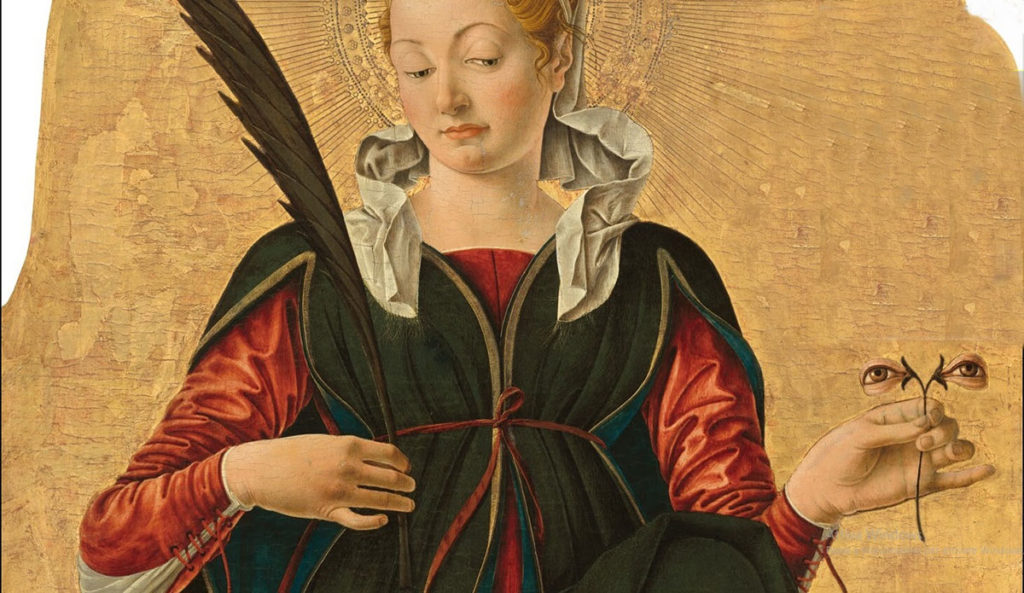
Depicted with a sword piercing her throat and a plate carrying her eyeballs, St. Lucia’s veneration of her devotion and martyrdom was expressed in visiting her shrines and leaving offerings such as wax eyes on her altars to pray for healing, especially of the ocular region. Her silver statue would be paraded through the town, the crowd reaching forward to touch and perhaps receive her blessings.
Hermeticism
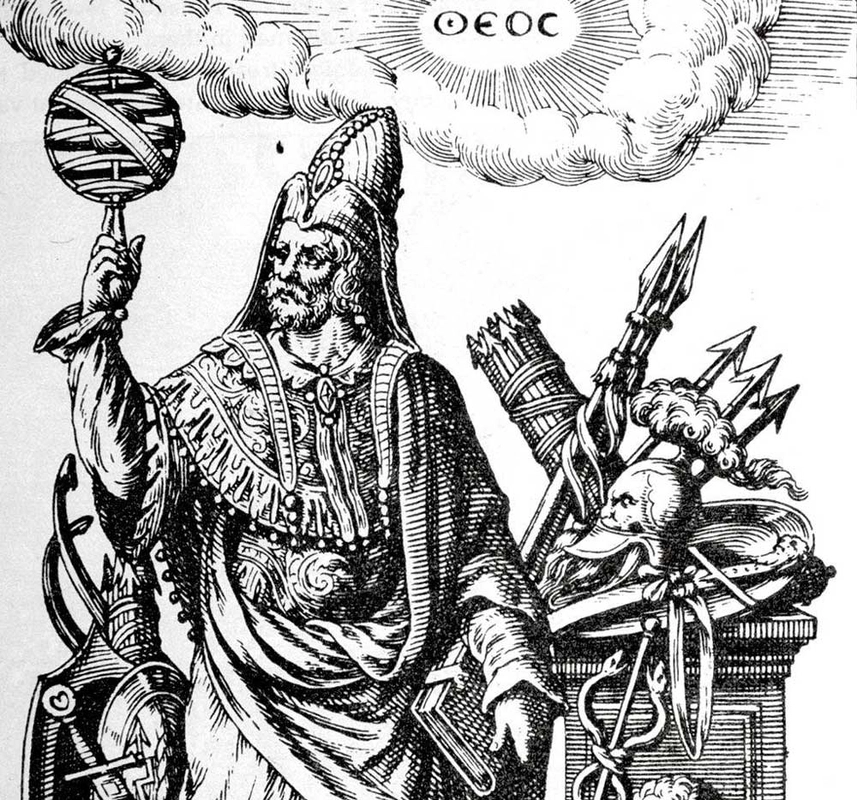
The Renaissance elite were fascinated with alchemy. Perhaps this comes as no surprise, given its grandiose claims of being able to turn lead into gold and grant immortality from a stone. But it wasn’t always a welcome subject with Catholics or Protestants, what with all the occultism, thaumaturgy, and pagan gods involved. The cult was largely based on the writings and developed philosophies of the Hermetic texts attributed to Hermes Trismegistus (He’s Hermes and Thoth combined. It’s a long story).
The practitioners seemed less concerned with focused, doctrinal worship and much more concerned with ascension through knowledge. Mingled with early Gnostic teachings and Christian mysticism, Hermetics believed that the connection between the macrocosm (the Universe/God) and the microcosm (the soul) was inextricable from one another. They held to a key concept within alchemy known as the prima materia, the raw stuff of primordial chaos, through which the possibility of transformation and purification exists.
On a more practical level, while those with elite patrons (such as John Dee) could sit around with wine and crackers discussing high mysticism and divine equilibrium, the more popular side of Hermeticism trickled down to the public. Astrology for one, spread like wildfire, as people tried to align their lives to the predictions of the planets.
Flagellants
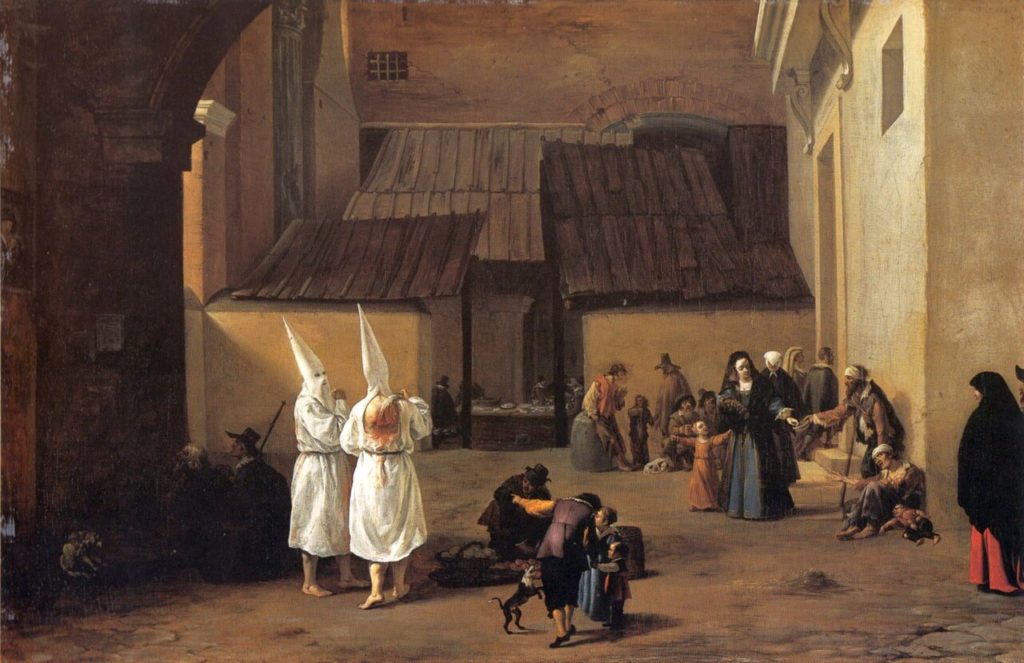
Though far more prominent during the 13th – 14th century, no cult conversation would be complete without the flagellants. During the Black Death, populations became desperate, seeking solace in a church which, frankly, had little to provide beyond the hope that this would end. Others took a darker route, believing the plague to be a punishment bestowed on them by God for sins which could only be atoned for by blood.
From town to town, these pilgrims would appear, dressed in simple clothing, singing hymns, and flogging themselves with flails. These were brutal weapons, often with heavy knots or even barbs tied into the tendrils that would scour and strip their backs bloody. They caused massive disruptions, both to those who found them disturbing and those who believed in their sacrifice. Flagellants often incited violence wherever they went, frequently targeting the Jewish community, whom they blamed for the plague. They attacked clergy members and local civil authorities who tried to bar them from entering cities or preached against them in the pulpits.
The practice had largely died down, at least on the public front, by the 15th century. Flagellants became a more restrictive order, often practicing behind closed doors or in rural congregations where they were not as likely to get in trouble for their acts.
Devil Worship
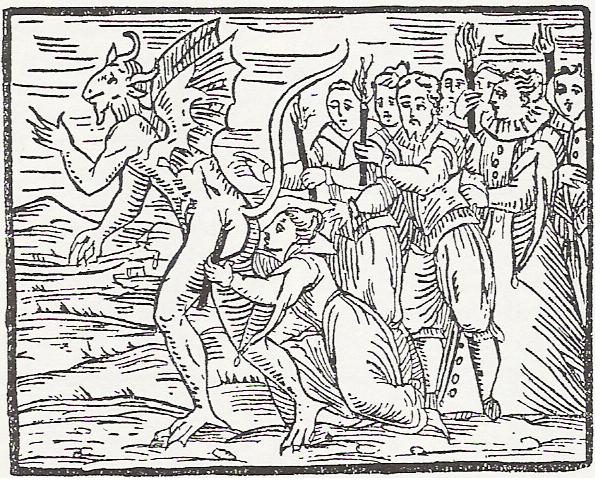
The difficulty with talking about ‘devil worship’ cults in 15th-16th century Europe is that it didn’t really exist. Not in any cohesive, formal gathering sense that one could point to and say, “By my troth, wytches of the devil’s ilk!” There were certainly accusations of individuals, such as Gilles de Rais. But the authorities seemed much more interested in prosecuting heresy as opposed to witchcraft or devil worship, such as we might think of it.
The Knights Templar is one such institution that was accused of blatant devil worship, thanks in part to their invented figure of Baphomet, but also in large part due to the vast wealth and holdings they had, which threatened certain monarchs of the day. Baphomet was not, in fact, a deity or devil in any sense.
The figure was made up so that the Templars might practice apostasy with their minds, but keep Christ in their hearts should they be captured or tortured by Saracen. The image of Baphomet we find so familiar today wasn’t really a thing until around the 19th century. An indictment even claims that not all Templars used the same idol for their training. Some had three heads, others used a human skull, or even a cat! The figure was not important; the mindset was.
It can be difficult to view Cults with anything but a sense of derision for the unpredictable element they often represent within a community. On the other hand, some cults become wildly popular, finding converts and devotees among the celebrities and the affluent of their day.