Unicorn: Myth and Meaning
When the last eagle flies over the last crumbling mountain
And the last lion roars at the last dusty fountain
In the shadow of the forest, though she may be old and worn
They will stare unbelieving at the last unicorn
- The Last Unicorn, America (1982)
There are two creatures in the realm of fantasy that have possessed the fascination of human beings for thousands of years, transcending religion, boundaries, and belief to continue into the modern era as figures of power and wonder. The first of these is the dragon, a classic figure of overreaching power and boundless greed that terrorizes its domain. The second is the unicorn, immortal, unknowable, a true entity of antiquity, a vessel of light guiding through the darkness. Unicorns have been a part of human storytelling in one form or another since 2000 B.C., and while the lore surrounding this wild creature has undergone many changes, it would seem that the unicorn has no intention of being captured just yet.
What is a Unicorn?
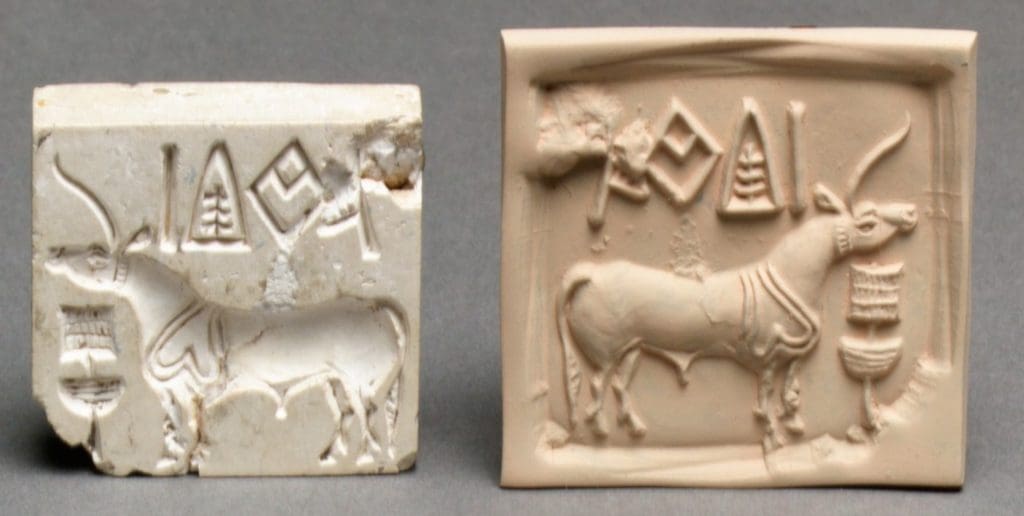
Indus Seal
2600 – 1900 B.C
The creature you see is not what most people would associate with the titular unicorn. It is cowlike, with a stocky body, square-shaped head, and inelegant frame. This is not a mere bovine in profile. No, this is the unicorn of the Bronze Age Indus Valley (South Asia; now Pakistan, Afghanistan, and northwest India). Its long, singular horn curves upwards in proud display; the seal, impression, and mold above depict the creature with what is thought to be an offering table. The relevance and symbolism of this image is still debated among scholars today. Theories range from the depiction of a religiously significant icon to the sign of a wealthy merchant clan of the era. Others point to its relation to other horned figures as sexual or fertility idols that are common during this period of human history. While its true meaning to the people of its era may be lost to history, there is significance to its presence so early on in our world.
We see the unicorn resurge during classical antiquity. Or rather, we see Greek natural historians associating very real animals, such as the oryx, Indian ox, and rhinoceros, with the mythical unicorn. It was the belief of the Greeks that the unicorn hailed from India and was an undeniably real, physical animal. Not a supernatural entity or creation. The earliest information we have comes from Ctesias, who in his book Indika (On India), described the unicorn as a ‘wild ass’ that was very fast and had a horn of white, red, and black roughly 28 inches long. Aristotle, Strabo, and even the ubiquitous Pliny the Elder all had their take on this minor menagerie of possible unicorns. But I think my personal favorite description comes from Cosmas the Monk (Cosmas Indicopleustes, “Indian Voyager”), a 6th-century monk during the reign of Emperor Justinian, who traveled to the Aksumite Empire in Africa. At the palace of the King of Ethiopia, Cosmas saw four bronze statues, from which he made this claim:
“They speak of him as a terrible beast and quite invincible and that all its strength lies in its horn. When he finds himself pursued by many hunters and on the point of being caught, he springs up to the top of some precipice whence he throws himself down and in the descent turns a somersault so that the horn sustains all the shock of the fall, and he escapes unhurt.”
-Cosmas the Monk, 6th century
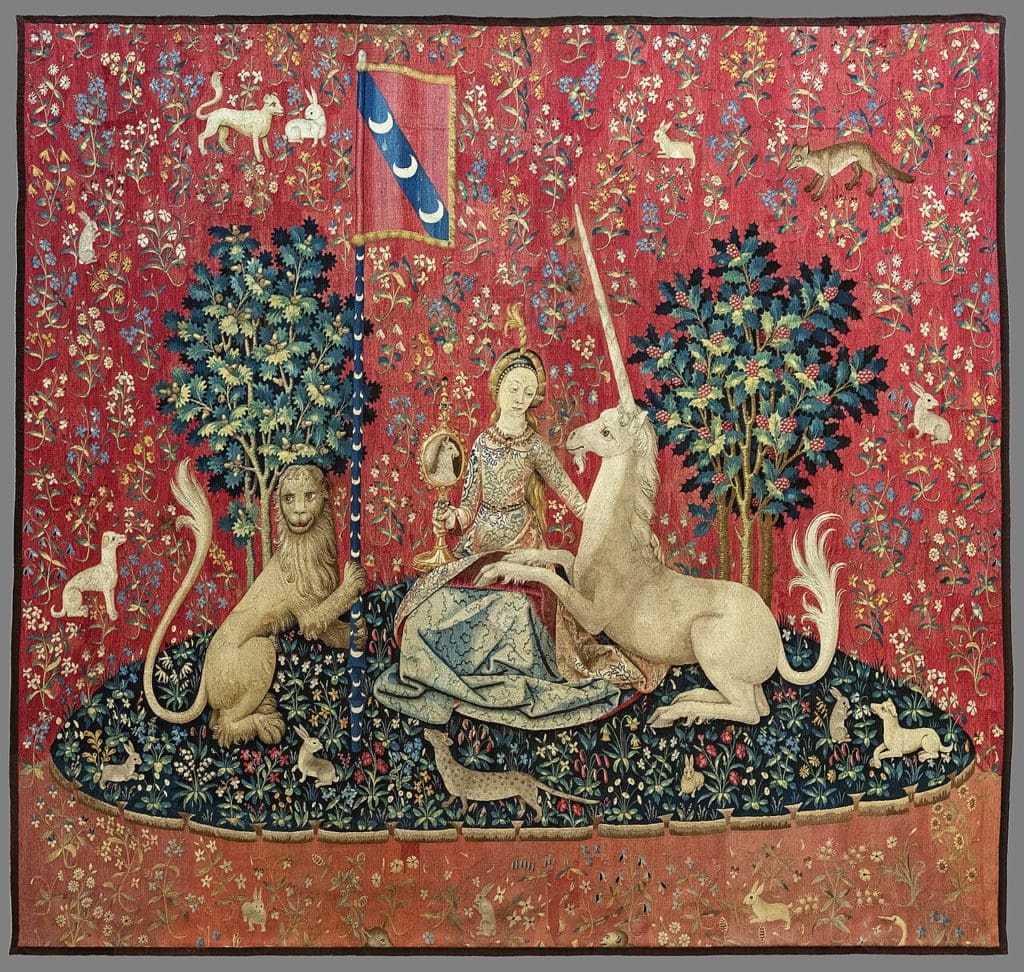
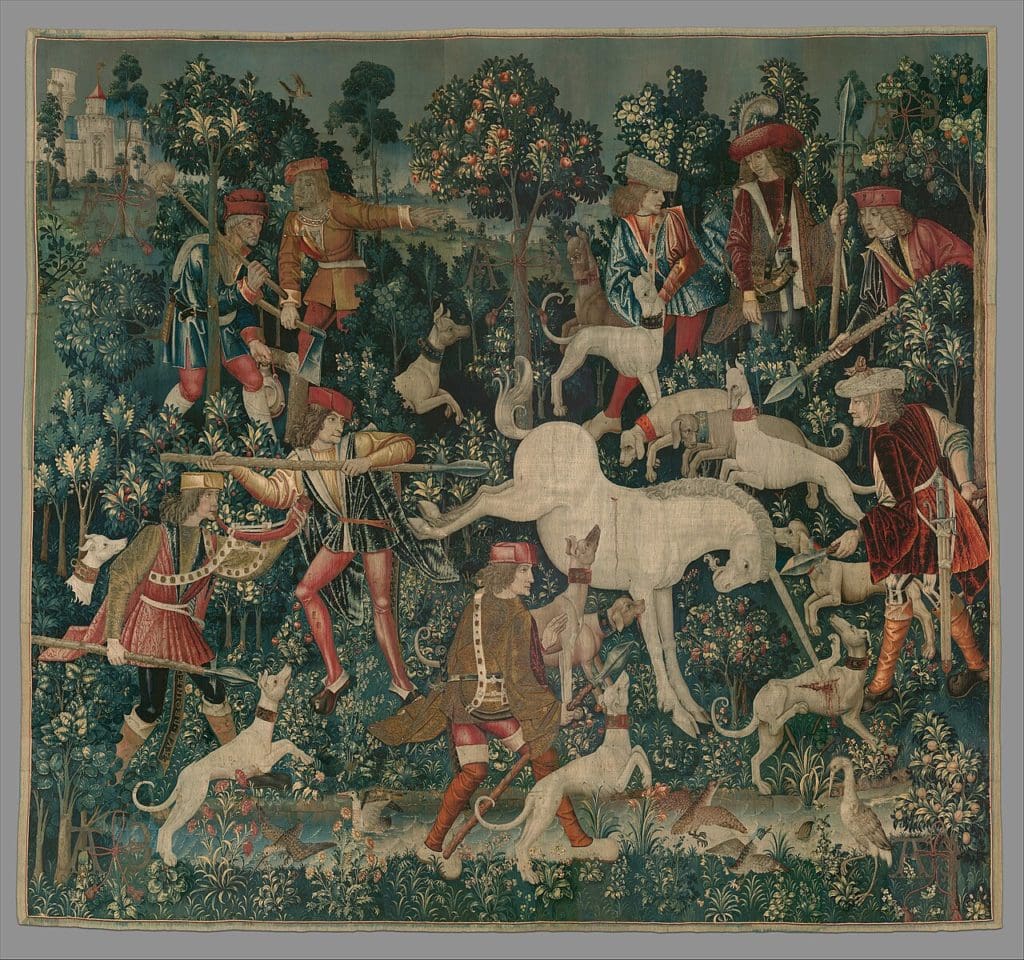
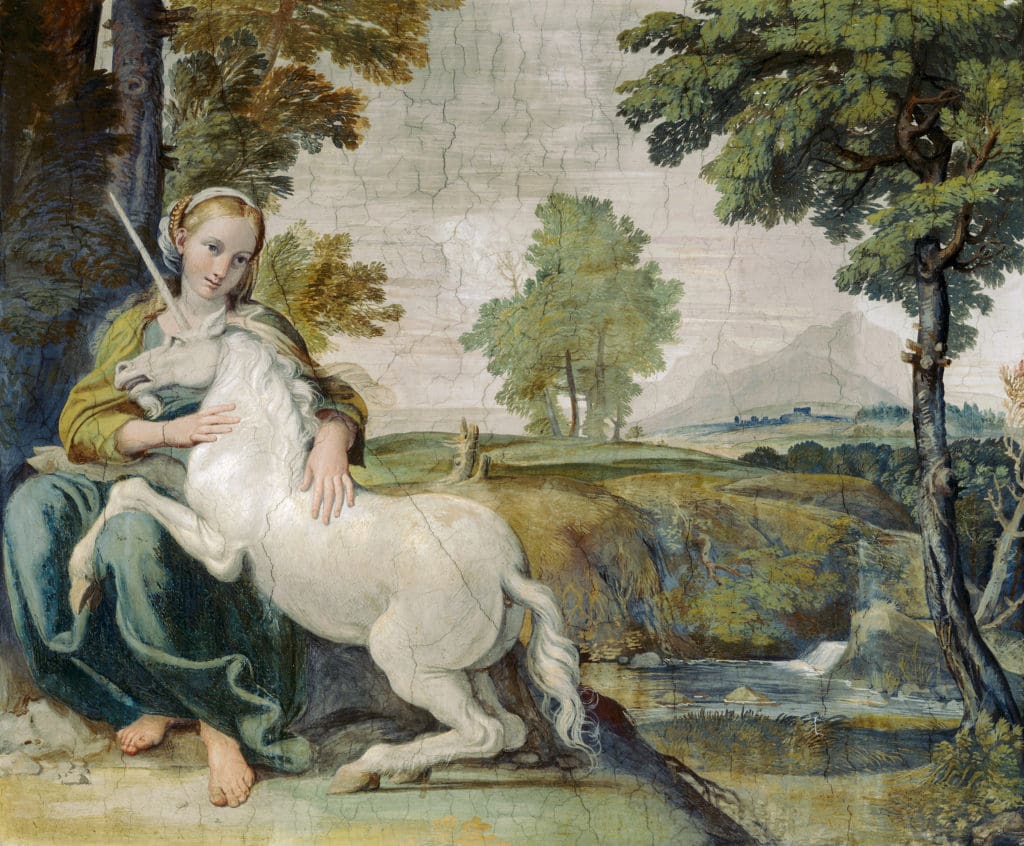
It is during the Middle Ages and Renaissance that we see a stark change resulting in a billowing lore dump regarding the unicorn’s nature and purpose. We begin to see the perception of the unicorn change from that of a holy creature, sacrosanct in its presence, to a resource which can be hunted, tamed, and imprisoned. It is during Late Antiquity that the allegory of the virgin representing the Virgin Mary and the Unicorn representing the Incarnation of Christ was introduced to the public consciousness. This theme would follow throughout much of the artwork depicting the unicorn during this era, winding the mystical nature of the creature with Christianity and its dogmas. The Passion of Christ and the hunting or capture of a unicorn are one and the same, leading to some rather interesting ethical questions about the obsessive drive to own pieces of one’s belief as a testament of faith.
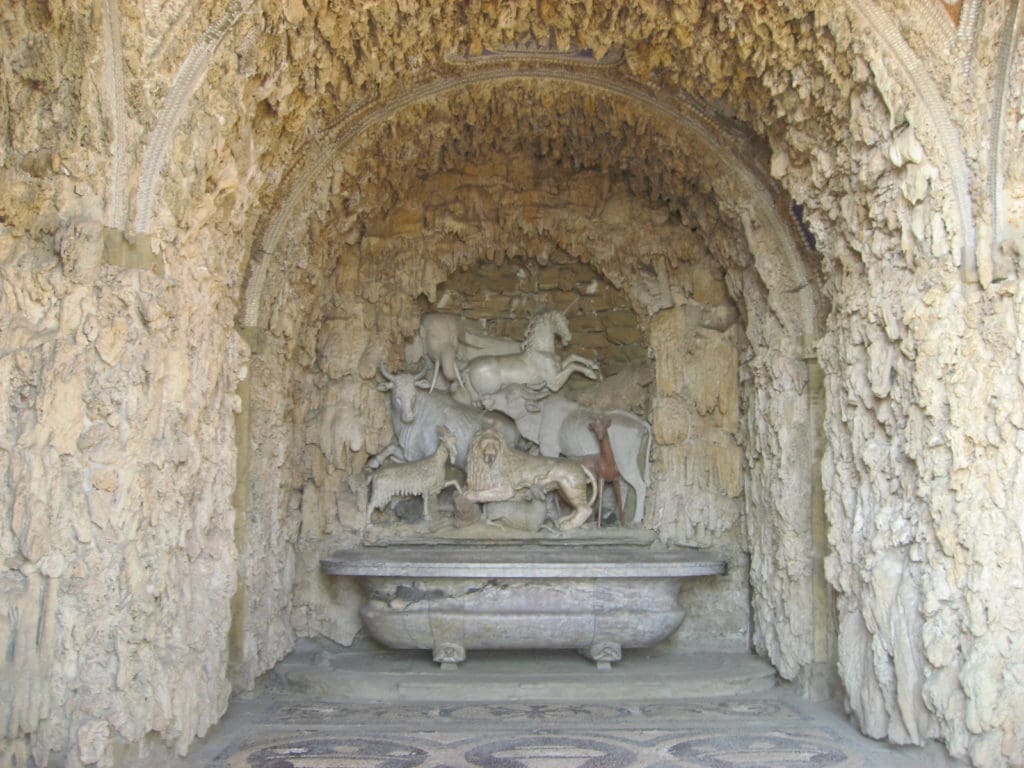
Medici Villa of Castello (1530)
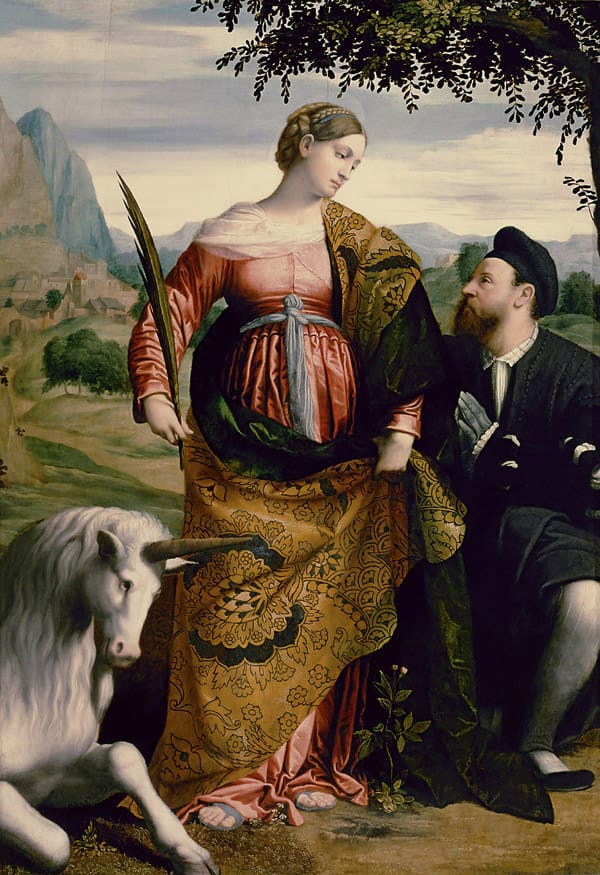
Moretto da Brescia, 1530
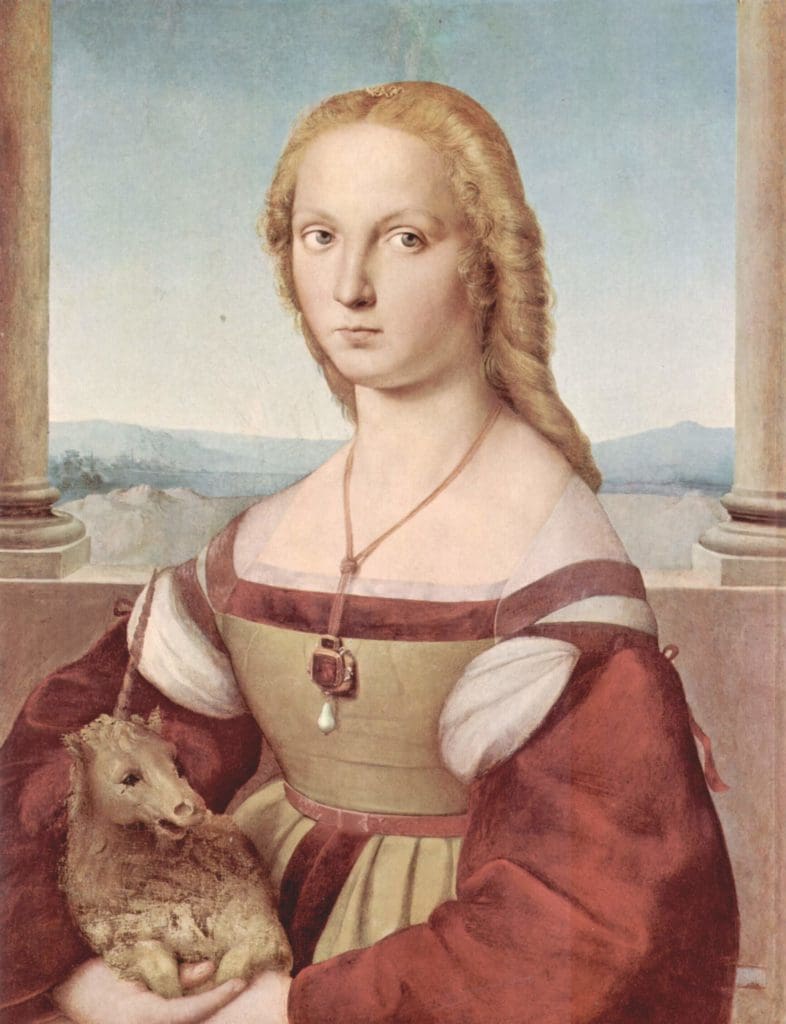
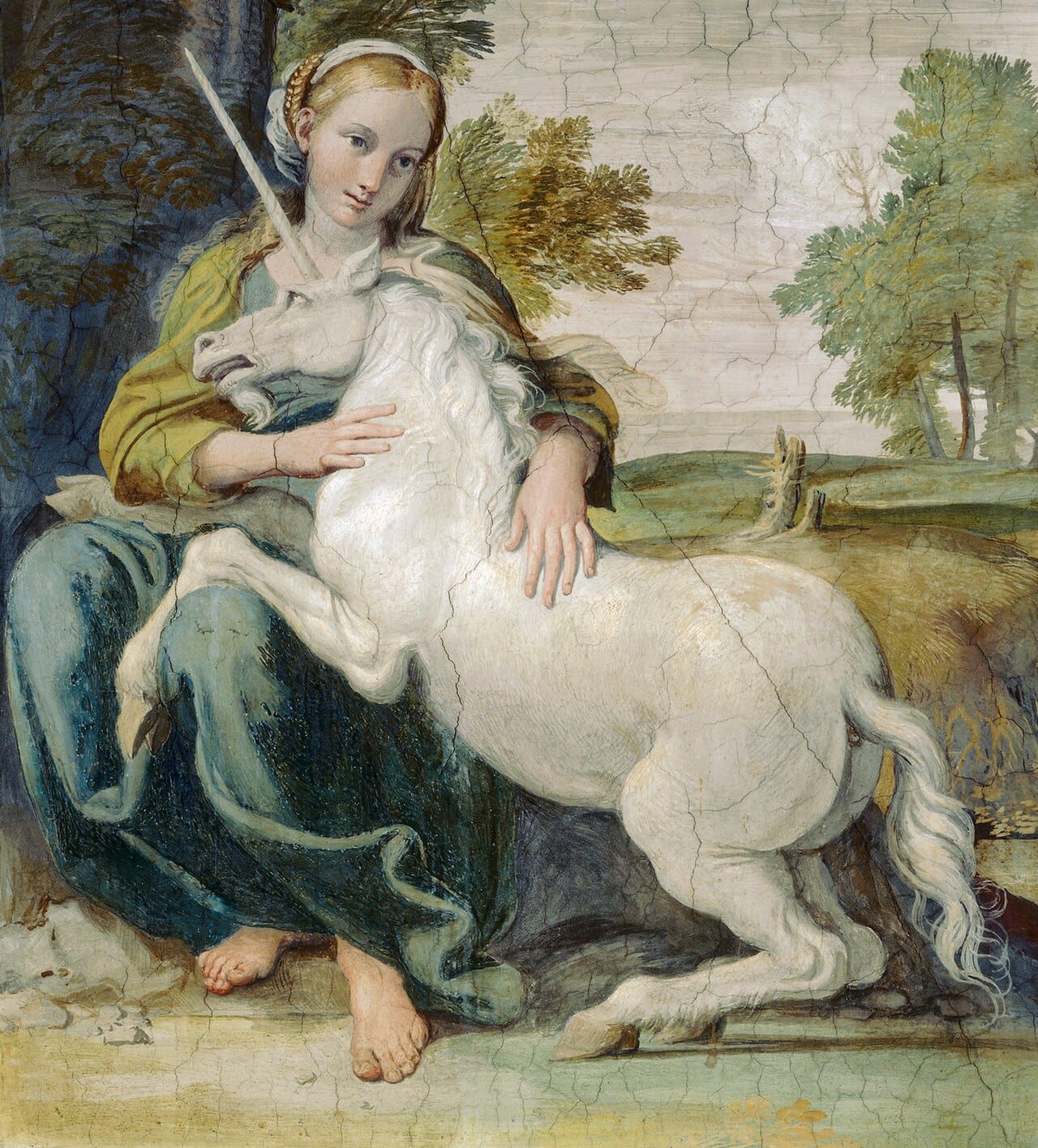
On a more secular level, as humanism was on the rise, the unicorn again was shaped to fit our needs. A wild creature of wondrous proportions became a testament to courtly love, chastity, and faithful marriage. Diminutive, yet fierce, the unicorn often stood as a symbol of chastity or purity as depicted in Raphael’s Portrait of a Lady with a Unicorn (1505). Narwhal horns were sold for medicinal purposes. It was believed that it could detect poisons, curse diseases when imbibed, and the pieces of these faux-unicorns were often put in cups as gifts to royalty. It was during the 15th century that the unicorn became a popular subject in heraldry, depicted with cloven hooves, the beard of a goat, a tail better suited to a lion than a horse, and the magnificent spiral horn. The unicorn is typically rampant, rearing back with its front legs in the air. Its presence in coats of arms suggests a unique mindset, one that values unconquered independence and regal ferocity along with virtue and moral strength.
Modern Symbolism and Unicorn-maxxing
(1985)
(1985)
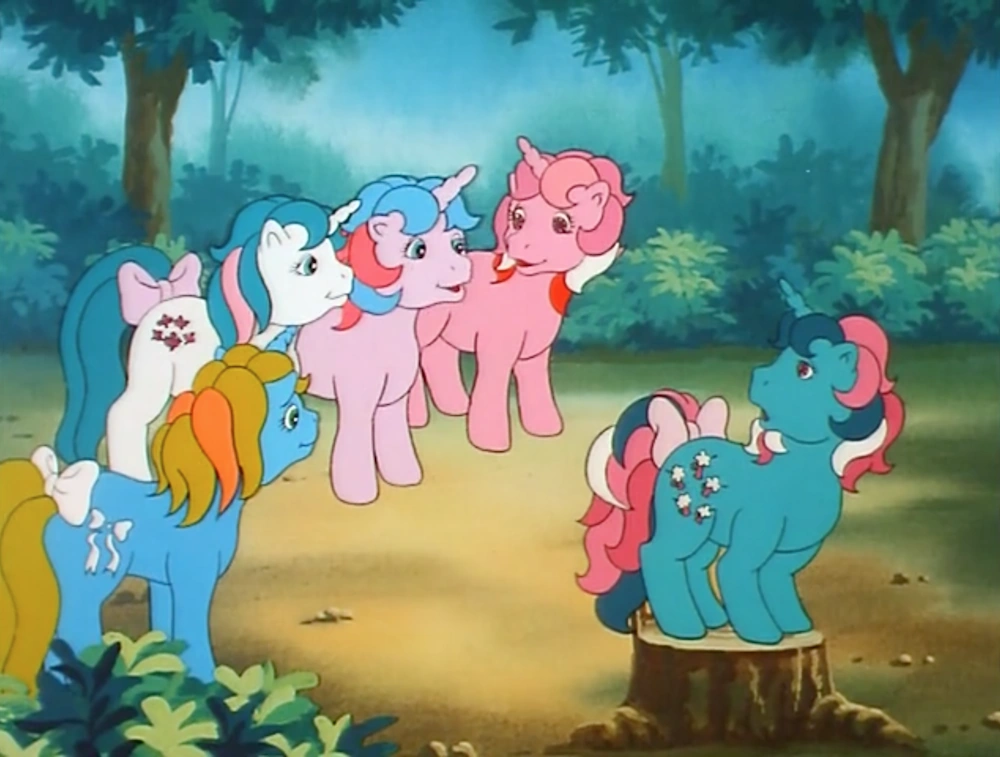
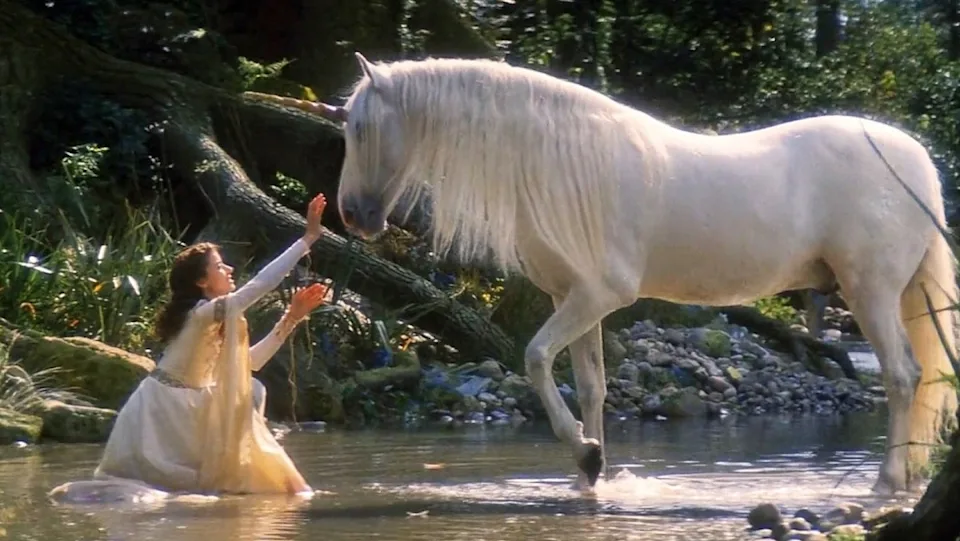
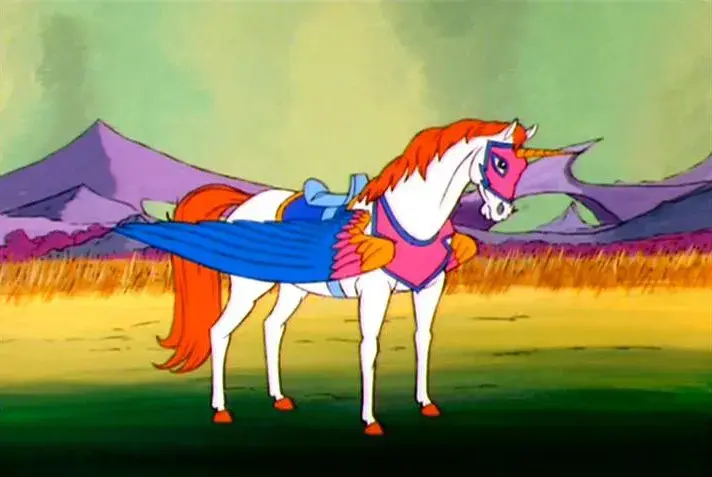
During the 80’s and 90’s, unicorns enjoyed a popular resurgence through media and children’s toys aimed overwhelmingly at young girls. The creature which for centuries was subject to the whims of young women was now commodified, captured in miniature for you to brush and adore and play out intense epic dramas the likes of which Hollywood only wishes it could achieve. From My Little Pony (G1), She-Ra’s alicorn Swiftwind (1985), to Legend (1985), and Lisa Frank bedsheets, unicorns were now synonymous with girlhood in all its wild whimsy and unfettered love of colors everywhere. With a backwards glance, this can feel very reductive, but when we take a look at the previous symbolism of the unicorn, it makes a certain amount of sense. A powerful, dynamic creature that is still somehow safe to approach and will lie comfortingly by your side. A magical beast, one that recognizes the ineffable you without question and offers understanding that the real world often lacks.
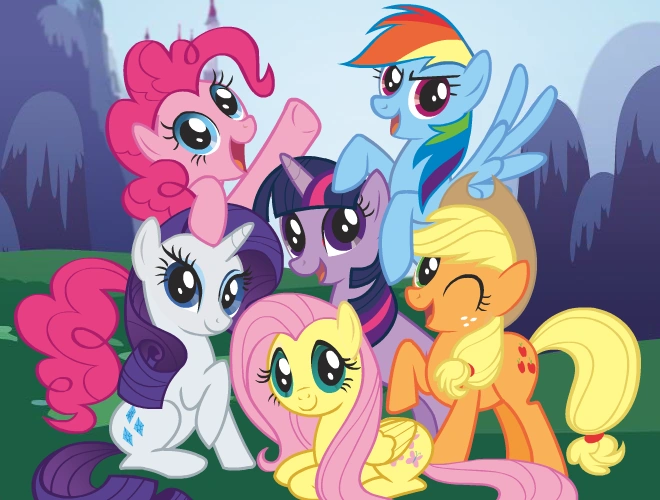
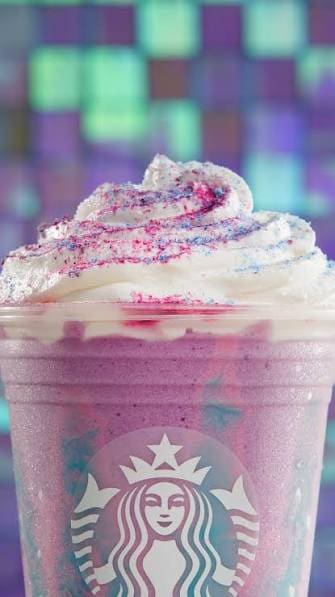
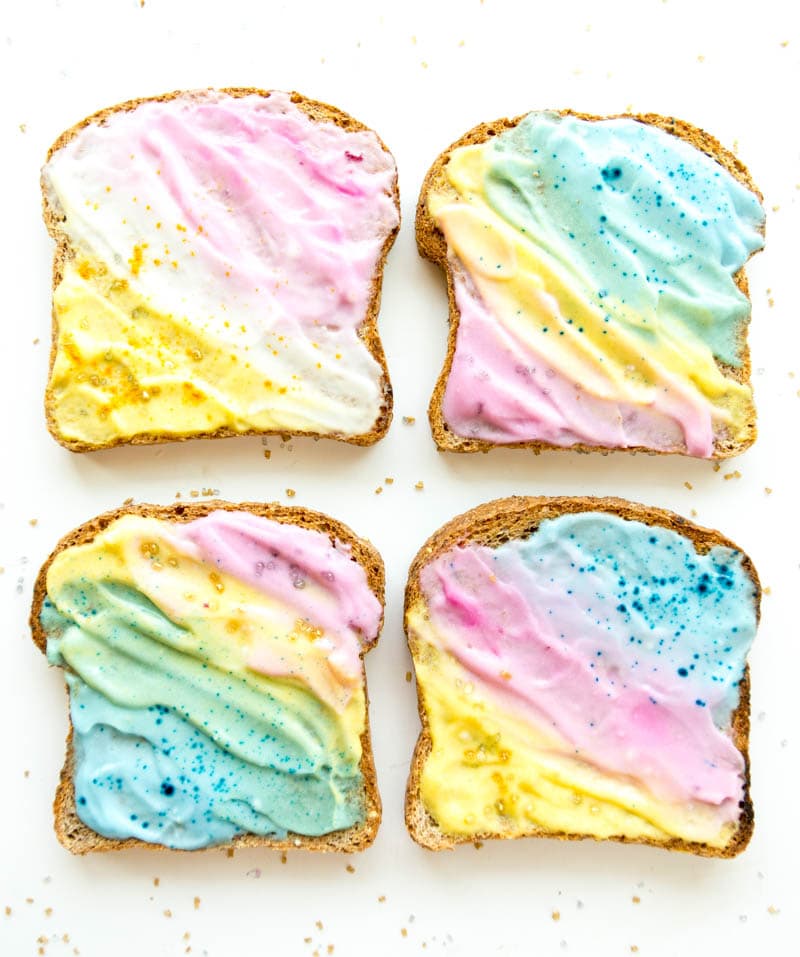
Is it any surprise that we remain drawn to such a creature? From about 2016-2019, millennials and kids alike got to enjoy the popularity of the unicorn as unicorn-themed products exploded onto the market. Unicorn toast, unicorn lattes, unicorn eyeshadows, unicorn snot (body gel glitter), unicorn nails. There was no hiding from this escapist explosion of glitter and rainbows for a few years, but that’s not a bad thing. In fact, the modern interest in unicorns seems to be more about freedom, solidarity, and creative will. My Little Pony: Friendship is Magic (G4) was at the height of its popularity, with the cast of Unicorns, Pegasi, and Earth ponies taking a departure from hyper-defined stereotypes towards in-depth and developed characters.
(2011)
(2017)
(2025)
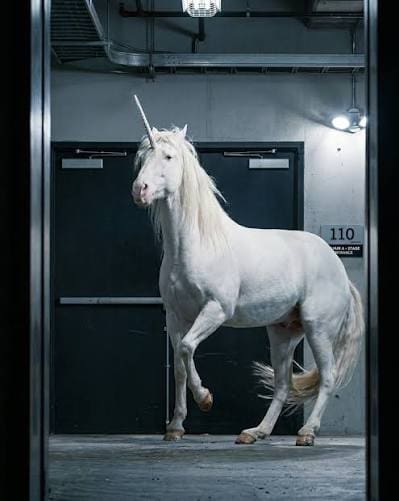
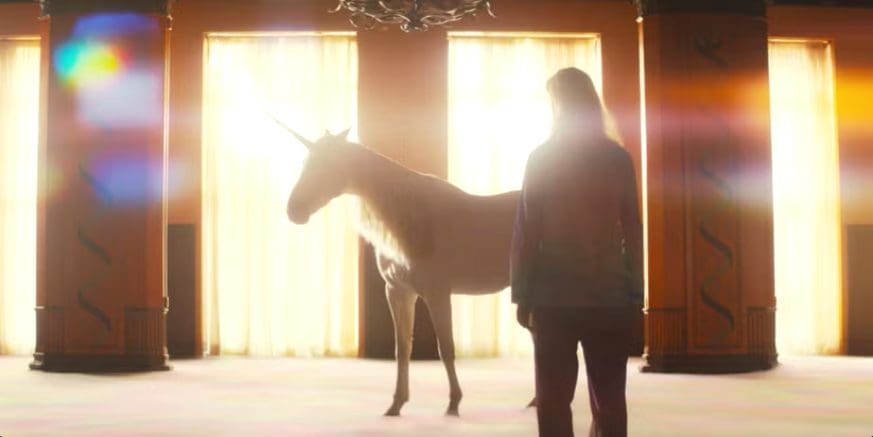
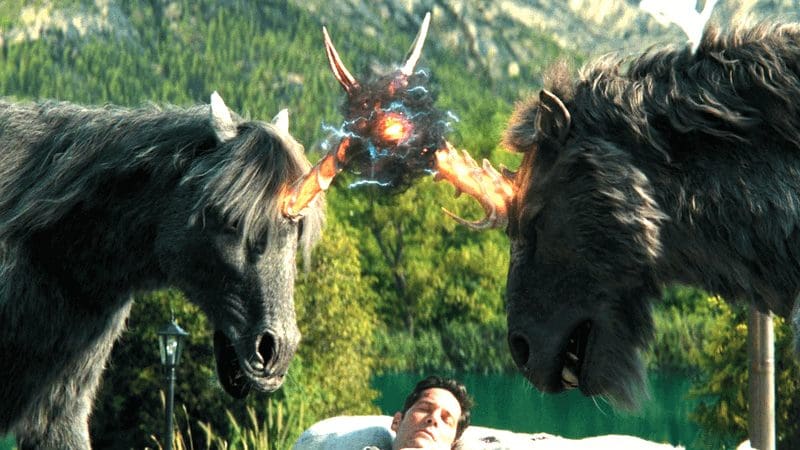
Not content to be limited in any facet, unicorns have also broken free from restrictions by showing up in adult media. Cabin in the Woods (2011) features a unicorn as one of the infinite horrors capable of being unleashed on unsuspecting campers. Brie Larson started in Unicorn Store (2017), in which the main character Kit must prepare herself for the responsibility of owning a real, live unicorn on a journey of adulthood and self-acceptance. Death of a Unicorn (2025) takes us from fantasy to horror-comedy, returning to the old themes of untamable ferocity, the elite hoarding resources, and the healing power of love.
In the secular sense, the unicorn has become inextricable from the larger queer community as a symbol of defying societal norms and embracing the self. Though there is no consensus as to why the unicorn was given this honor, it’s not too difficult to understand the relation. A hybrid animal, the unicorn does not conform to any classification or label beyond its own. As an animal that exists between the accepted reality and our innate sense of wonder, the unicorn refuses to sacrifice what it is for what it ‘should’ be. Its status as one-of-a-kind or extremely rare connects to the queer experience of feeling isolated and searching for others like you. Most importantly, the unicorn endures. Through the baying of hounds and the piercing of arrows, it endures. The unicorn rejects the jewel-studded collars and privileged enclosure it is offered, embracing the crack of breaking beams and the sharp metallic whine of tearing chains as it chooses freedom.
The Unicorn and the Self
“As for you and your heart and the things you said and didn’t say, she will remember them all when men are fairy tales in books written by rabbits.”
- Peter S. Beagle, The Last Unicorn
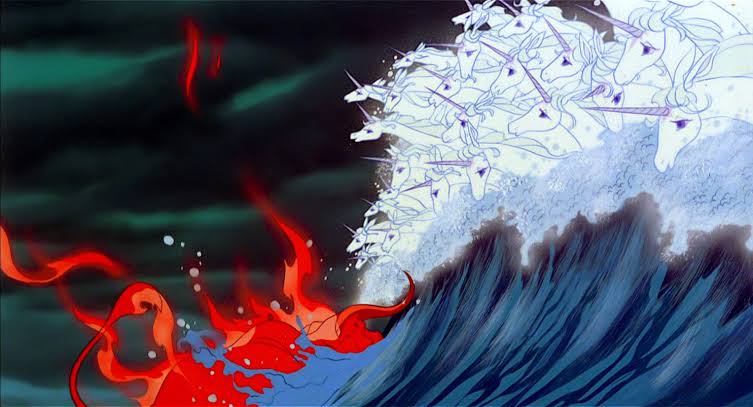
Over the years I have watched The Last Unicorn hundreds of times, and it has taken me into my 40’s to start grasping the deeper emotions that hang in this starlight tapestry of Rankin/Bass 80’s animation and the heartbreaking writing of Peter S. Beagle. At seven or eight years old I did not understand why most people could not see anything more than a white mare. It felt stupid for Mommy Fortuna to keep close the very thing that would kill her. I did not get why a king, who has everything, could fail to be happy. I did not understand why Molly Grue wept and raged at the sight of a unicorn she had waited her whole life to see.
I did not understand why the unicorn would choose to leave love behind.
The unicorn is not a passive entity, not according to its own natural state. It can be tamed but never domesticated. It is wholly itself even at the cost of its own existence. Perhaps that is the price of being a rarity. Maybe it’s just knowing who you are and refusing to be told differently.
From tapestries to TV shows, the unicorn has stood the test of time and remained a potent cultural figure in whatever form it takes. This gives it strong personal meaning for both the individual and the crowd, regardless of why. The decision to make the unicorn the feature of this year’s Ohio Renaissance Mug was far from arbitrary, and its design speaks to the yearning in each of us to embrace freedom and know ourselves, maybe even one another, a little bit better.